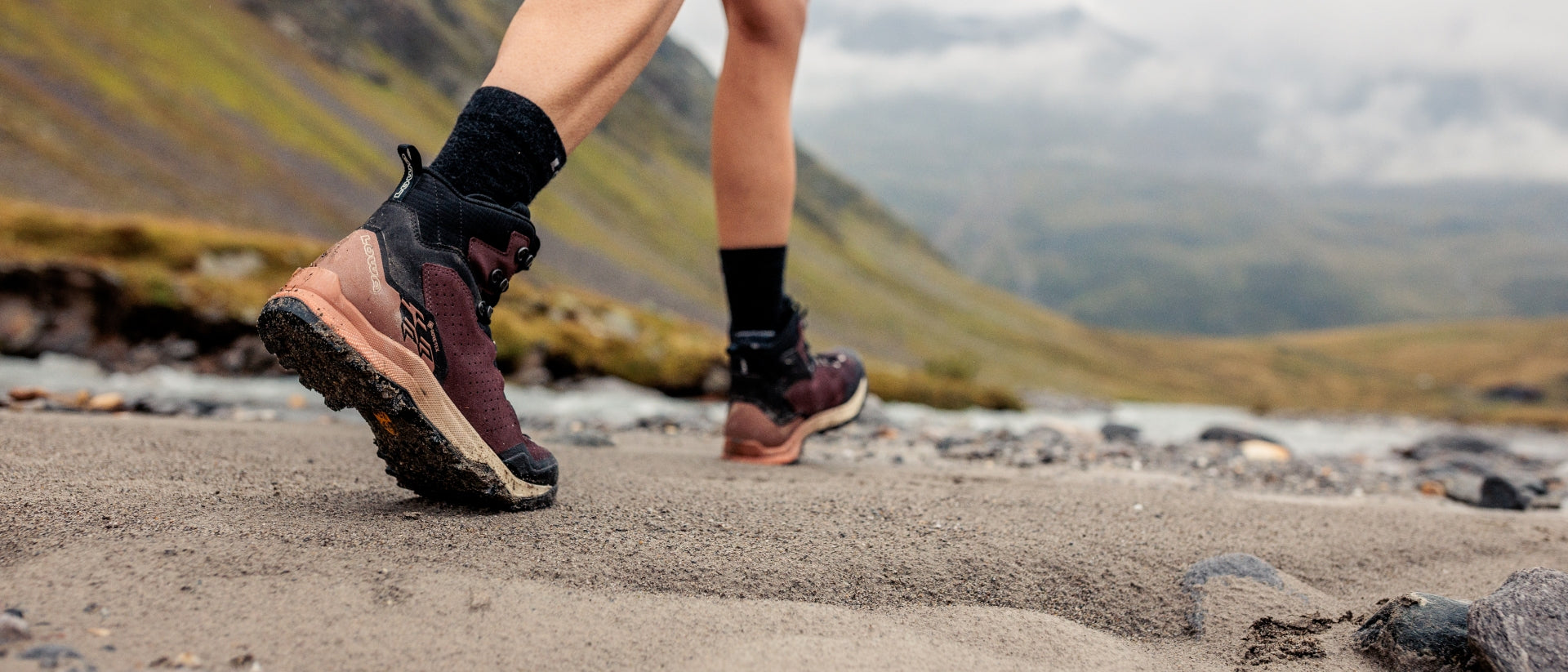
When you're standing in a hiking shop deciding between leather hiking boots vs synthetic options, the choice can feel confusing. Both materials have their devoted followers, and for good reason. Understanding the key differences between leather or synthetic hiking boots will help you make the right decision for your walking adventures, whether you're tackling the Lake District fells or planning a multi-day trek through the Scottish Highlands.
What Material Is Best for Hiking Boots?
Understanding the materials is essential before making your decision. Traditional leather hiking boots are crafted from full-grain leather, nubuck, or suede: natural materials that have been used for footwear for centuries. Synthetic leather hiking boots, on the other hand, utilise modern materials such as polyester, nylon, and various polymers designed to mimic or improve upon leather's properties.
In this article we highlight some of the features of leather and synthetic boot construction, and deep dive into the best applications for each option.
Durability and Longevity
One of the most significant factors when considering leather hiking boots vs synthetic alternatives is durability. Leather boots, when properly maintained, can last for many years. Leather is naturally resistant to abrasion and develops a patina over time that many hikers find appealing. When looked after properly, LOWA's leather boots are renowned for their exceptional longevity.
Synthetic materials have improved dramatically over recent years. Modern synthetic hiking boots can withstand considerable use and often prove more resistant to specific conditions like prolonged exposure to water. However, they typically have a slightly shorter overall lifespan than quality leather boots. The trade-off is that synthetic boots often require less maintenance and can be more resistant to certain types of damage, as well as offering an alternative to leather.
Weight and Comfort
Weight is often a deciding factor when choosing the right boots for hiking. Synthetic materials are generally lighter than leather, which can make a noticeable difference over the course of a long hiking day, so lightweight synthetic boots can reduce fatigue significantly.
However, leather offers superior comfort for many hikers once broken in. Leather moulds to your foot shape over time, creating a personalised fit that synthetic materials struggle to replicate. LOWA's leather boots feature premium leathers that soften and adapt whilst maintaining their supportive structure.
Breathability and Moisture Management
The debate around leather or synthetic hiking boots often centres on breathability. Leather is naturally breathable, allowing moisture from your feet to escape whilst providing protection from external elements. This makes leather boots excellent for all-day comfort in varied conditions, but they often won't be as breathable as a synthetic boot.
However, both leather and modern synthetic boots often incorporate breathable membranes like GORE-TEX. These membranes provide excellent waterproofing whilst allowing moisture vapour to escape. In hot conditions, some synthetic boots can offer superior breathability to leather, particularly lightweight synthetic hiking boots designed for summer hiking.
Waterproofing
Quality leather boots, especially those treated with wax or waterproofing agents, provide excellent water resistance. Leather naturally repels water to some degree, and with proper care, leather boots can keep your feet dry through puddles, wet grass, and light rain. In combination with the GORE-TEX membrane, they are often very effective at controlling the climate inside the boot.
Synthetic hiking boots often incorporate waterproof membranes from the outset, providing reliable protection in wet conditions. They require less maintenance to maintain the upper and dry more quickly than leather does.
Support and Stability
When considering what material is best for hiking boots for challenging terrain, support becomes crucial. While the majority of a boot’s support and stability will come from the midsole, the upper does make a difference. Synthetic materials can be engineered to provide specific levels of support, but leather naturally offers more stability and support for the foot. Leather will also provide more protection for the foot from outside elements when you’re walking, such as stones falling or stubbing your foot against an unseen tree root.
Temperature Regulation
Leather provides excellent insulation, keeping feet warm in cold conditions and cool in moderate temperatures. This natural temperature regulation is one of leather's most valued properties. Synthetic materials can struggle with temperature extremes, sometimes feeling cold in winter and hot in summer.
However, modern synthetic boots are improving in this regard, with various technologies designed to enhance temperature management. Lightweight synthetic hiking boots particularly excel in warm weather, offering ventilation that heavier leather boots can't match.
Maintenance Requirements
The leather vs synthetic hiking boots debate often comes down to maintenance. Leather requires regular care: cleaning, conditioning, and waterproofing treatments to maintain its properties. This maintenance is essential but time-consuming. Neglected leather can crack, stiffen, or lose its waterproofing. Generally speaking, the upper on a well looked after leather boot should last longer than a synthetic boot though.
Synthetic boots require minimal maintenance beyond basic cleaning. They don't need conditioning or special treatments, making them ideal for hikers who want low-maintenance footwear. Simply wipe them clean after use, and they're ready for your next adventure.
Environmental Considerations and Vegan Options
Increasingly, hikers are considering the environmental impact of their gear, and the leather vs synthetic hiking boots debate has significant sustainability implications.
Leather is a natural, biodegradable material, but its production can carry environmental costs from chemicals and livestock farming. However, since most hiking boot leather comes as a by-product of the meat industry rather than animals raised specifically for leather, it represents a form of resource utilisation that might otherwise go to waste. Quality leather boots' longevity means fewer boots need to be manufactured over time, reducing overall environmental impact. Opting for resoleable boots also prolongs their lifespan.
For vegans and those avoiding animal products, synthetic hiking boots offer a cruelty-free alternative. No animals are harmed in the production of synthetic materials, making them the clear choice for plant-based hikers. This ethical consideration is increasingly important to many outdoor enthusiasts.
While traditional synthetic materials are typically petroleum-based, derived from non-renewable fossil fuels, many manufacturers, including LOWA, are researching sustainable ways of incorporating recycled materials into synthetic boots, reducing reliance on virgin petroleum products. LOWA is also committed to more sustainable production methods, including reducing water usage, minimising waste, and improving factory conditions.
Cost Considerations
Generally, quality leather hiking boots command a higher initial price than synthetic alternatives. However, their longevity can make them more cost-effective over time. Synthetic boots offer a lower entry price point but may need replacing more frequently.
Is Synthetic or Leather Better for Hiking Shoes?
The answer depends on your hiking style, priorities, and conditions.
Choose leather hiking boots if you:
- Hike frequently in varied conditions
- Value long-term durability and longevity
- Don't mind regular maintenance
- Prefer traditional aesthetics and materials
- Need maximum support for heavy loads or technical terrain
- Want boots that will mould to your feet over time
Choose synthetic hiking boots if you:
- Prioritise lightweight performance
- Prefer low-maintenance gear
- Hike primarily in warm conditions
- Need boots that dry quickly
- Follow a vegan lifestyle or prefer animal-free products
Final thoughts
The leather vs synthetic hiking boots debate ultimately comes down to personal preference, intended use, and your values. Both materials have evolved significantly, and modern boots of either construction can serve you well on the trails. Consider your hiking habits, the conditions you'll face most often, how much time you're willing to invest in maintenance, and your environmental and ethical priorities.
LOWA's expertise in both leather and synthetic hiking boot construction means you're getting quality regardless of which material you choose. Our leather boots feature carefully selected, premium leathers combined with modern construction techniques, while our synthetic options utilise advanced materials engineered for performance.