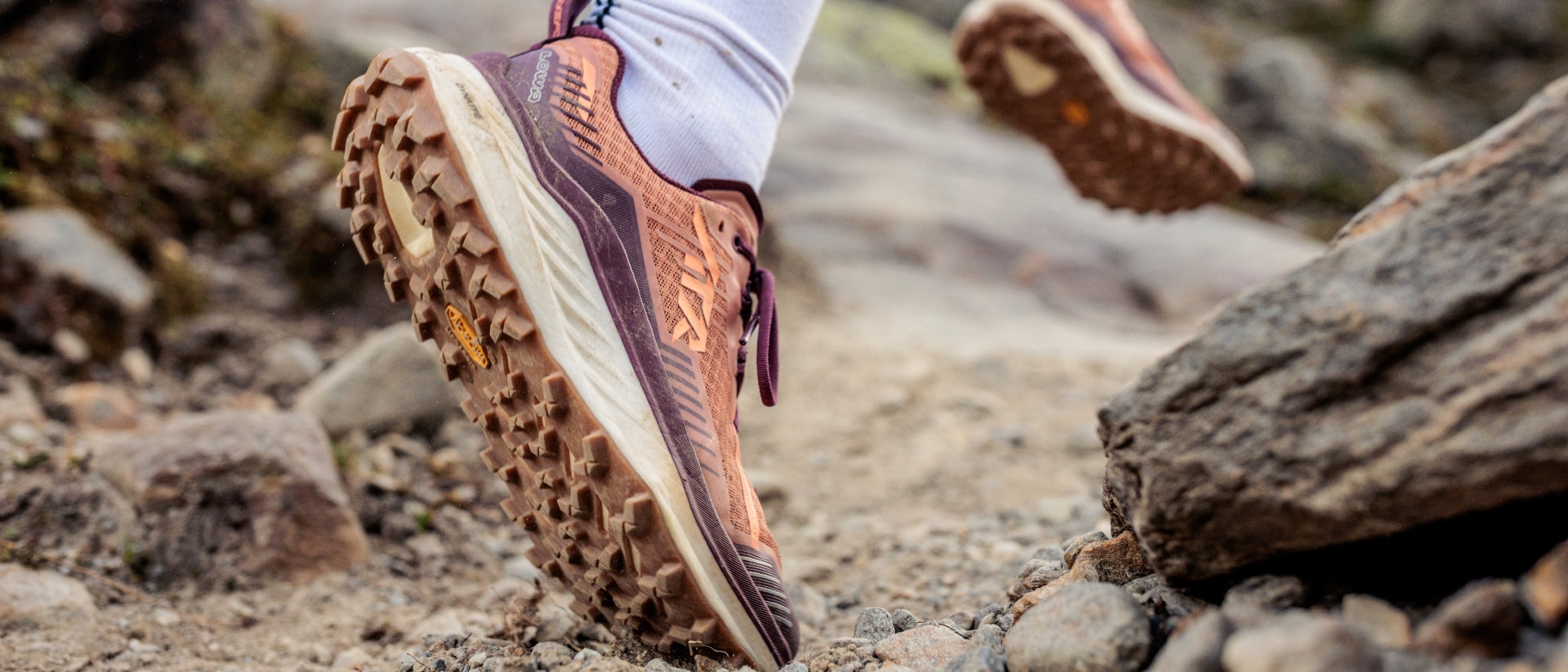
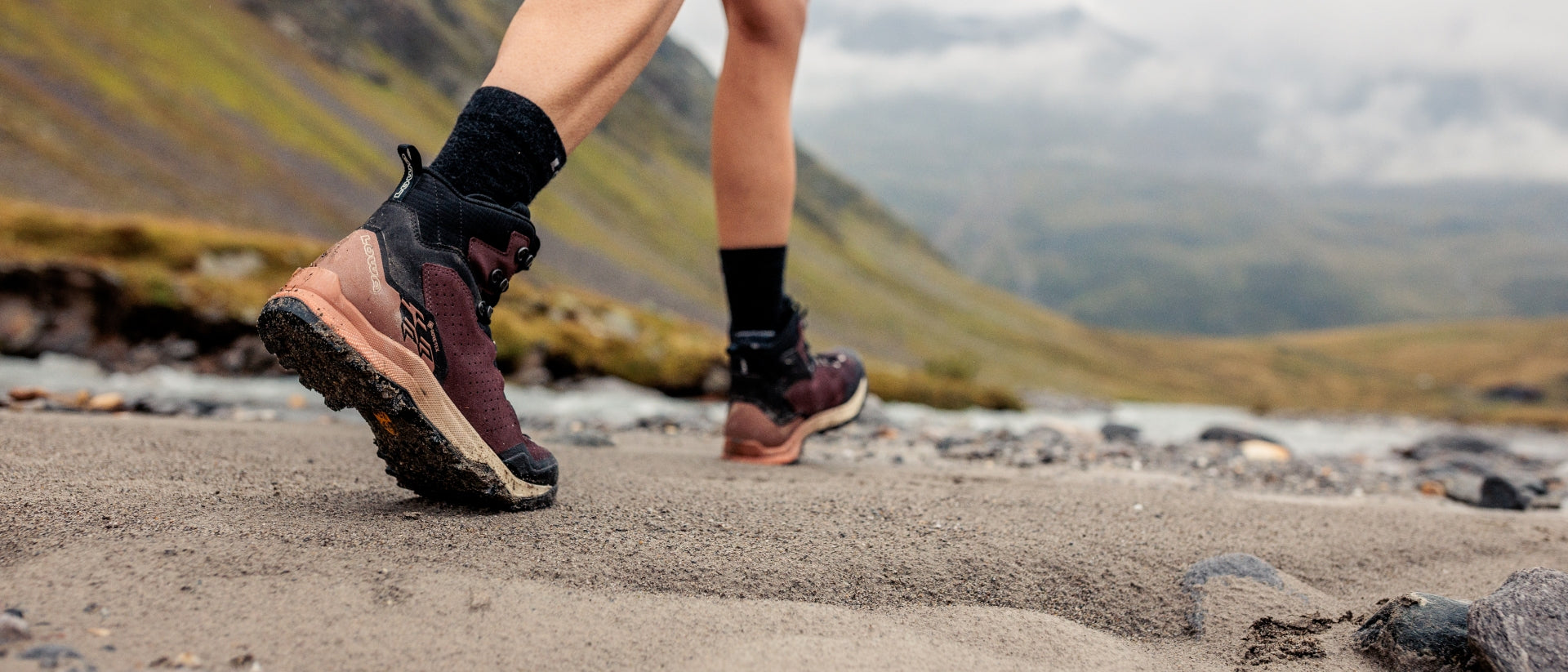
Hiking boots sit at the centre of every good walk. When they fit well, you barely think about them. When they don’t, they dominate every step.
In this helpful guide, you’ll learn how a hiking boot should fit and how to find the right shoe for you.
We’ll also give you a 5-minute test on how to see if your boots fit right.
Let’s get into it:
Why Hiking Boot Fit Matters
Most hiking injuries don’t come from slips or falls. They come from friction, pressure, and movement inside your boots.
Every step creates force. And over thousands of steps, small issues add up.
A poor fit commonly leads to:
- Blisters caused by repeated rubbing
- Toenail damage from downhill impact
- Numbness from restricted blood flow
- Hot spots that worsen with distance
- Arch and foot fatigue from unstable support
Modern hiking boots are built to be supportive and durable and feel feel comfortable from the start. If your walking boot doesn’t fit right today, then it’s unlikely to “break in” and feel right later on.
That’s why taking a few minutes to check fit properly is worth it and can help prevent hiking injuries and discomfort.
What a Good Fit Actually Feels Like
One reason boot fitting feels confusing is that many people don’t know what they’re aiming for. Some assume hiking boots should feel tight so the foot does not move. Others expect them to feel loose and forgiving, like trainers.
In reality, a good fit sits between those two extremes. A good walking boot fit should feel secure without feeling restrictive.
- Your foot should feel held in place, but not squeezed.
- Nothing should dig in. Nothing should rub. No single area should demand your attention.
- Your toes should have room to move, especially important for when you're walking downhill. A good guide is at least a fingers width of space to the end of the boot from all your toes.
- Your heel should feel controlled ratther than locked rigidly in place.
- Pressure across your foot should feel even, not concentrated in one spot.
In simple terms, comfort should feel dull. If something feels noticeable while standing still, it will feel worse once you start walking as your feet will naturally expand a little after spending time walking.
Size Is Only Part of the Story
Getting the right size matters, but size alone doesn’t guarantee a good fit.
In many cases, two boots marked with the same size can feel completely different once they’re on your feet. This is due to different models being built on different last shapes.
Feet size also changes throughout the day as they swell slightly as you move and warm up. Trying boots on at different times in the day gives a more realistic sense of fit.
You should always stand and walk around when you try boots on, as the fit will change under body weight.
It’s also important to wear the socks you plan to hike in, as sock thickness affects internal space more than many people expect.
Should You Size up in Walking Boots?
Sizing up is often suggested, especially if you fall between sizes, but it’s not always the right solution.
Extra length can allow your foot to slide forward too much, particularly on downhill sections. This increases heel movement and toe impact, which often causes blisters and bruised toenails.
All LOWA boots are made in UK sizing, and the EU sizing is a conversion from there, but the number on the label matters less than how the boot feels once you put them on and start walking.
If a boot feels tight, try adjusting the lacing or checking the width and volume before assuming you need a bigger size.
Trying the boot on properly will always tell you more than guessing based on other shoes you own.
The 5-Minute Hiking Boot Fit Test
You don’t need a long hike to spot most fit issues. In many cases, you can tell whether a hiking boot will work for you within five minutes of wearing them around the house.
There are five key areas to focus on:
1. Toe room
2. Heel security
3. Forefoot width
4. Midfoot and instep
5. Flex point alignment
Here's how:
1. Toe Room
While standing upright, slide your foot forward until your toes lightly touch the front of the boot.
You should be able to fit roughly one finger behind your heel. If there’s less space than this, your toes are likely to hit the front of the boot on descents. If there is much more space, your foot may slide forward too easily.
If toe room feels borderline, we recommend testing on stairs before making a decision, while bearing in mind feet will tend to swell and get a little bigger during a hike.
2. Heel Security
Walk on flat ground, then up and down stairs. A small amount of heel movement is normal. If your heel lifts or slides with every step, friction will build quickly, which we don’t want.
First, try adjusting the laces to lock the heel more firmly in place. If movement remains even after tightening, the boot shape or internal volume is likely wrong for your foot.
3. Forefoot Width
Walk for a few minutes and pay attention to how the ball of your foot feels.
Tingling, burning, or sharp pressure here usually means the boot is too narrow. This kind of pressure tends to show up early and rarely improves with wear.
If loosening the laces does not reduce pressure, you likely need a wider fit or a different boot shape.
On the other hand, if the shoe feels too wide, you may need to choose a narrow fit option instead.
4. Midfoot and Instep
Tighten the laces gradually and notice how the top of your foot feels.
Pressure or pain across the instep, the upper surface of your foot, suggests limited space in this area.
A loose feel even with snug laces often indicates too much internal volume, which can lead to movement later in the walk.
If adjusting the laces does not improve things, this is usually a sign the boot is not well matched to your foot shape.
5. Flex Point Alignment
As you walk, notice where the boot bends. The flex point should line up with the ball of your foot.
If it doesn’t, your foot works harder with every step. Over time, this often leads to fatigue and rubbing, even if the boot feels comfortable at first.
Why Downhill Walking Exposes Fit Problems So Quickly
Many hikers only notice fit issues once they start heading downhill. This is because walking downhill causes gravity to push your foot forward. Pressure will then increase on your toes, which makes heel control far more important
When trying boots on, use stairs or a slope if possible. Your toes should not strike the front of the boot, and your heel should feel controlled rather than sliding.
If downhill testing reveals problems that lacing cannot fix, the boot is unlikely to work on real walks.
What Common Fit Problems Are Telling You
Toe Bang or Black Toenails
This usually comes from short length, poor heel hold, or excess internal volume. Try improving heel security with lacing first. If toe contact continues, the boot is likely too short or too unstable for your foot.
Heel Blisters
Heel blisters form through friction, which almost always means movement.
Thicker socks and padding can reduce symptoms, but they rarely fix the cause.
Persistent heel movement usually means the boot doesn’t suit your heel shape or volume.
Numb or Tingling Toes
This often points to a narrow forefoot or tight lacing across the instep. Loosen the laces and reassess. It might be that toe box shape doesn't suit your particular foot shape.
Hot Spots
Hot spots are early warning signs. They signal friction or pressure that will become a blister if ignored. If you feel one forming during a short walk, treat it as a sign to reassess fit and lacing rather than something to push through.
Arch Pain
Arch pain often links back to insufficient support or a mismatch between boot stiffness and your foot. Insoles can help, but always recheck fit after adding them.
Achilles Rubbing
Rubbing around the Achilles usually points to heel movement or a shape mismatch. This rarely improves with use.
Fit Details Many People Miss
Some feet need extra attention.
If you have wide feet or bunions, look for forefoot space without pressure at rest. Tightness here rarely improves.
If you have a high instep, check lace pressure early. Pain or numbness on top of the foot usually signals limited instep space.
If you use orthotics, insert them before testing fit. Orthotics change internal volume, so always recheck toe room and heel hold afterwards.
Men’s and women’s boots often differ in heel volume. Heel slip frequently comes from a shape mismatch rather than an incorrect size.
Do Hiking Boots Break In?
Modern hiking boots soften slightly with use, but they do not change shape in ways that fix poor fit.
If a boot feels uncomfortable initially or causes pain during short walks, it will not become comfortable later. Comfort should feel right from the start.
Conclusion
Choosing the correct size and fit for boots is a tricky, but vital part of hiking. Correctly fitting boots help prevent injuries and fatigue, and ensure comfort and stability when walking on varying terrain. Always refer to size guides and try boots on if possible to ensure you pick the right footwear.
LOWA boots are engineered to provide comfort from the get-go. If in doubt, make sure to visit one of our stockists in person, allowing you to test the fit before purchasing and receive expert advice on picking the perfect boots for your needs.