It's a question that arises time and again: are running shoes comfortable for walking? Perhaps you've invested in quality running trainers and wonder if they'll serve double duty for your daily walks. Or maybe you're eyeing a pair of lightweight runners and questioning whether they're suitable for longer distances. The answer, as with most footwear questions, isn't straightforward: it depends on what type of walking you're doing, the surfaces you'll encounter, and your individual biomechanics.
This guide will help you understand when running shoes work brilliantly for walking, when they fall short, and how to make an informed choice between running and walking-specific footwear.
Running Shoes vs Walking Shoes
Before we can answer whether running shoes are good for walking, it's worth understanding how these two types of footwear differ in their design philosophy.
Biomechanics of Running vs Walking
Running and walking are fundamentally different movements. When you run, both feet leave the ground simultaneously during each stride, creating impact forces of up to three times your body weight. Running shoes are engineered to absorb this shock, with generous cushioning in the midsole, particularly under the heel and forefoot.
Walking, by contrast, always keeps one foot in contact with the ground. The impact forces are lower, roughly 1.5 times your body weight, and the foot rolls through the stride more gradually, from heel to toe. Walking shoes typically feature a more uniform cushioning distribution and a lower, wider heel to support this rolling motion.
Construction and Support
Running shoes often have a pronounced heel-to-toe drop (the height difference between the heel and forefoot), typically ranging from 8–12mm. This design propels you forwards with each stride, complementing running's natural biomechanics. They're also lighter, as runners prize every gram saved over long distances.
Walking boots and shoes generally have a lower heel-to-toe drop and may incorporate stiffer midsoles for stability, especially in boots designed for uneven terrain. They often feature more durable outsoles, as walkers spend more time in contact with the ground per step, increasing wear.
Is It OK to Wear Running Shoes for Walking?
The short answer is yes: for many walking scenarios, running shoes perform as well as dedicated walking shoes would.
Are Running Shoes Good for Walking on Concrete?
Absolutely. In fact, they excel in this environment. The cushioned midsoles that runners appreciate on tarmac provide excellent shock absorption for walkers pounding pavements too. If your walking primarily consists of urban routes, park paths, or towpaths, running shoes offer several advantages:
● Superior cushioning protects joints from the repetitive impact of hard surfaces
● Lightweight construction reduces fatigue over long distances
● Breathability keeps feet comfortable during extended wear
● Flexibility allows natural foot movement on predictable, flat surfaces
Many people find running shoes perfectly comfortable for their daily commutes, lunch-hour strolls, or weekend errands around town.
Fitness Walking and Speed Walking
For those who walk briskly for exercise, running shoes can be an excellent choice. The responsive cushioning and lightweight design support faster paces, and the breathable uppers manage heat effectively during cardiovascular workouts. Speed walkers often prefer running shoes for exactly these reasons.
Gym and Treadmill Walking
Running shoes are ideal for treadmill walking or indoor fitness routines that incorporate walking intervals. The controlled, consistent surface of a treadmill suits the design characteristics of running footwear perfectly.
When to Consider Walking Shoes Instead of Running Shoes
Despite their versatility, running shoes aren't suitable for every walking scenario. Understanding their limitations helps you make better footwear choices.
Off-Road and Trail Walking
Typical running shoes designed for roads lack the aggressive tread, stability, and protection needed for trails, woodland paths, or rocky terrain. The soft, cushioned midsoles that feel glorious on pavements become unstable on uneven ground, increasing the risk of twisted ankles.
Trail running shoes offer better traction and stability, but dedicated hiking footwear still provides superior ankle support and underfoot protection for serious off-road walking.
Are Running Shoes Good for Long Distance Walking?
The suitability of running shoes for walking long periods of time depends on the distance and what you're carrying. For marathon-length walks on roads or well-maintained paths, quality running shoes can certainly suffice. However, if you're carrying a daypack with significant weight or planning multi-day walking tours, the additional support and stability of walking boots become increasingly valuable. Running shoes simply don't provide the same structural support when you're carrying extra load.
Wet and Muddy Conditions
Most running shoes prioritise breathability over waterproofing, which means soggy feet in wet weather. Walking boots with waterproof membranes like GORE-TEX keep feet dry through puddles, wet grass, and drizzle, all conditions the British walker encounters regularly. If your walks frequently involve damp or muddy conditions, running shoes without a waterproof membrane will disappoint.
Cold Weather Walking
Running shoes' breathable mesh uppers, whilst excellent for managing heat during exercise, offer minimal insulation. For winter walking, boots with insulated linings and weather-resistant uppers provide far superior comfort and protection from the cold.
Are Running Shoes Comfortable for Walking?
Comfort is subjective and depends on individual foot shape, gait pattern, and the specific shoe design. However, many people do find running shoes exceptionally comfortable for walking, particularly on paved surfaces.
The generous cushioning of running shoes can feel luxurious underfoot, and the lightweight construction means your feet tire less quickly. The breathable uppers prevent overheating, and the flexible soles allow natural foot movement.
That said, some walkers find running shoes too soft or unstable, preferring the firmer platform and structured support of walking-specific footwear. If you have a particular foot shape, such as flat feet, high arches or overpronation, you may find that shoes designed for your specific biomechanics, whether running or walking shoes, matter more than the category itself.
Introducing LOWA Running Shoes
LOWA has applied over a century of footwear expertise to create a trail running range that performs brilliantly both on the run and for fast-paced walking. Understanding that many outdoor enthusiasts blur the lines between hiking and running, LOWA has engineered shoes that offer versatility without compromise.
Our brand new running shoes are available in both men’s and women’s models.
LOWA Skyterra
The Skyterra represents LOWA's most technically advanced trail running shoe, designed specifically for long-distance running and ultra races. With a generous 33mm stack height and advanced DynaTPE cushioning, it delivers exceptional impact absorption, making it equally comfortable for extended walking sessions on hard surfaces. At 680g, it's cushioned enough for all-day comfort yet light enough to prevent fatigue.
Best for: Long-distance road walking, urban exploration, extended pavement routes, and anyone who values maximum cushioning.
LOWA Amplux 2
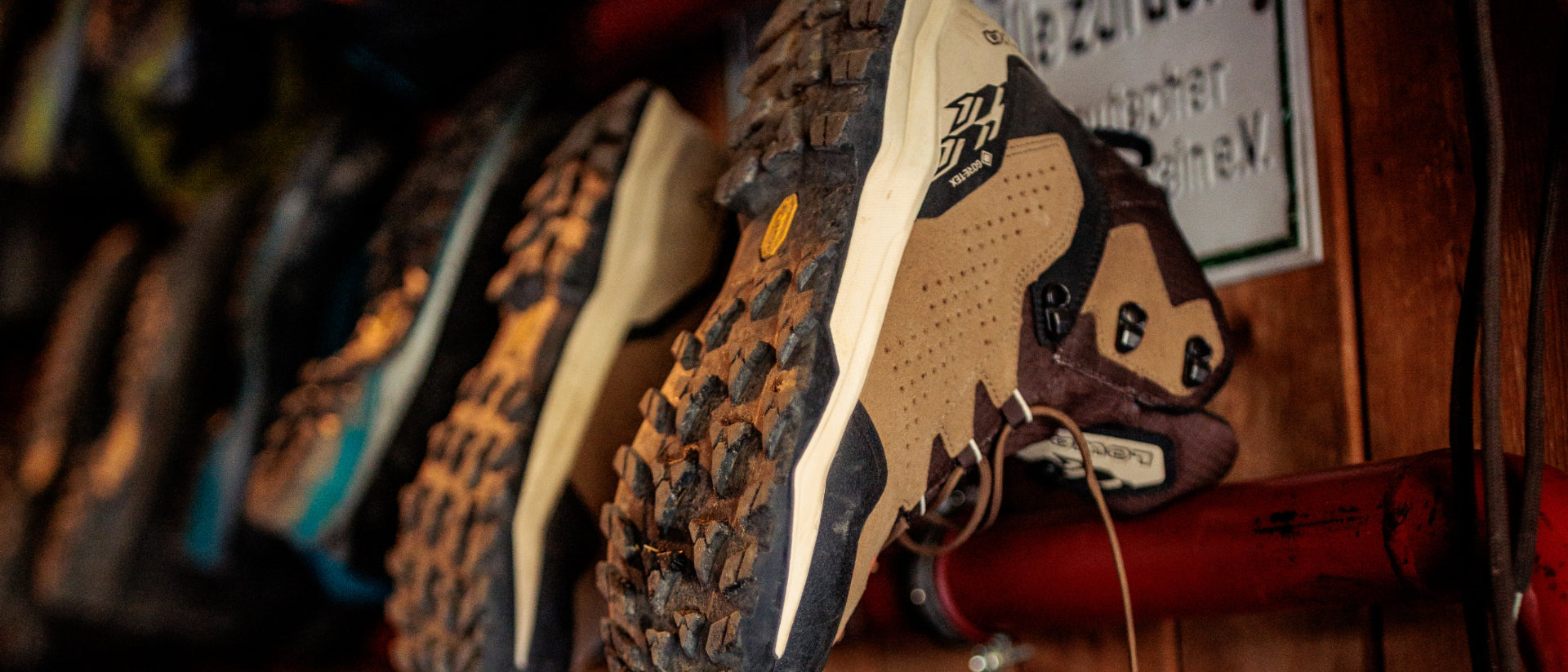
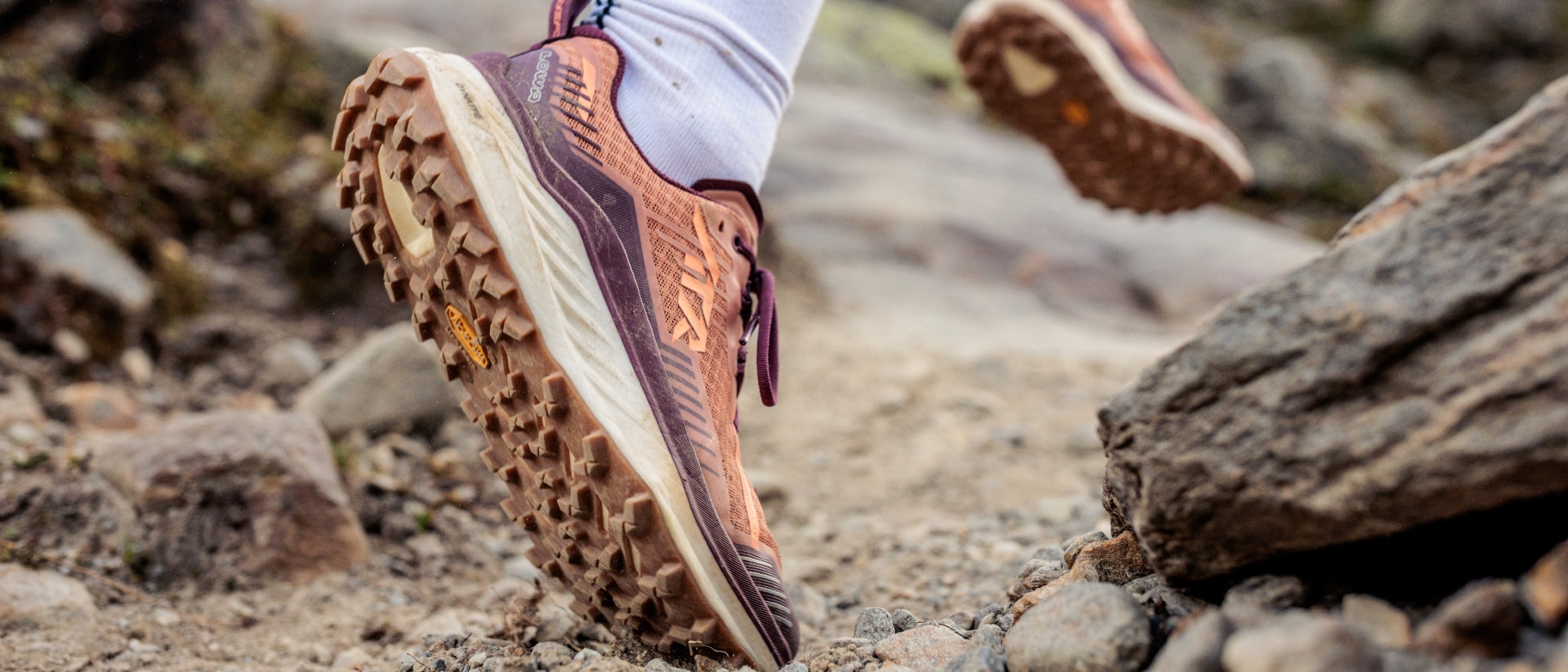
The Amplux 2 is LOWA's versatile all-rounder, striking a perfect balance between cushioning and ground feel. With a medium stack height and the LOWA Trac Agility sole featuring deep lugs, it handles both trails and pavements well. At just 590g, it's noticeably lighter than traditional walking shoes, reducing fatigue on longer walks. The secure, low-volume tongue and reinforced lacing ensure your foot stays locked in place.
Best for: Mixed-terrain walking, speed walking, fitness routines, and those who want one shoe for both running and walking.
LOWA Amplux 2 GTX
For British weather, the Amplux 2 GTX adds an invisible-fit GORE-TEX membrane to the Amplux design. This waterproof protection makes it ideal for year-round walking in unpredictable conditions. The same grippy Trac Agility sole and supportive upper design mean you get all the performance of the standard Amplux 2, plus the confidence to tackle wet grass, puddles, and drizzle without soggy feet. At 630g, it remains impressively light for a waterproof shoe.
Best for: All-weather walking, commuting in changeable conditions, and anyone who needs waterproof protection without the bulk of traditional boots.
LOWA Fortux GTX QC
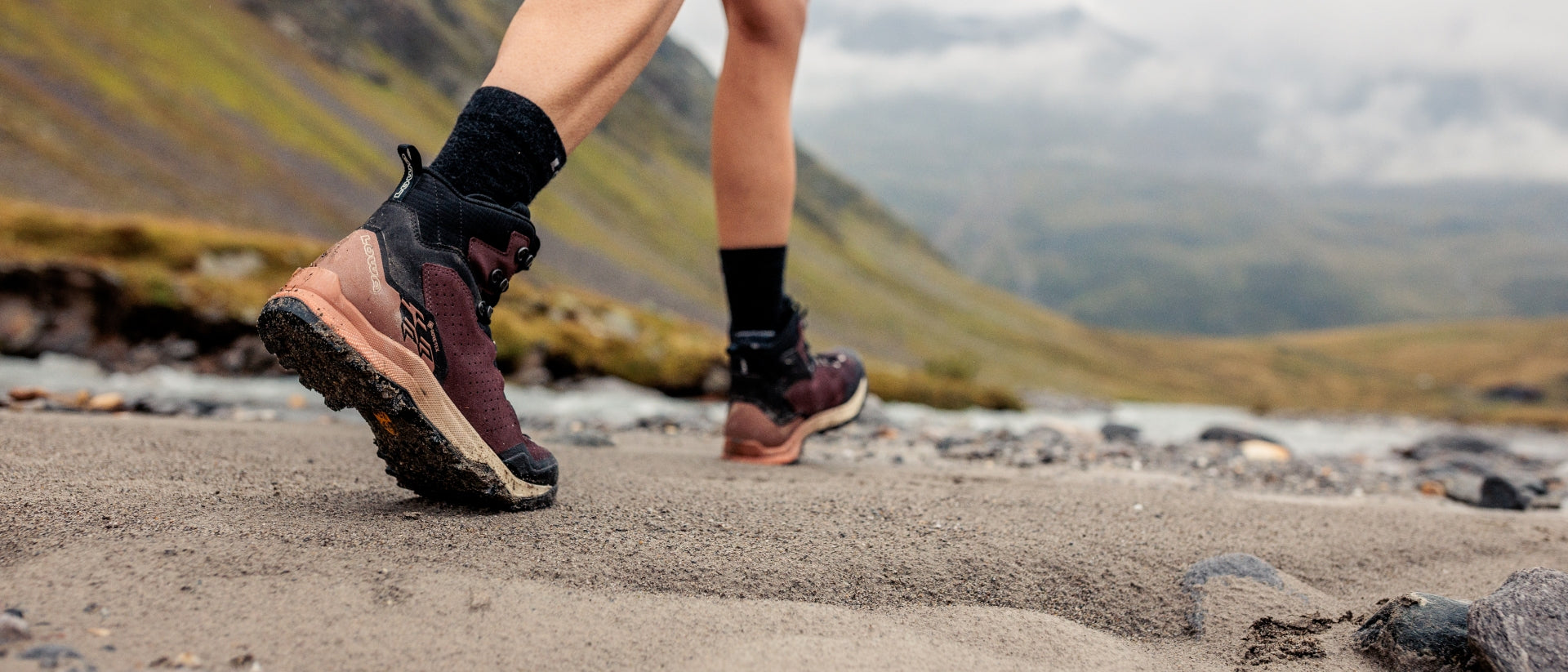
Sitting between a trail runner and a lightweight hiking boot, the Fortux GTX QC features a quarter-height cut that provides ankle support whilst maintaining the agility of a running shoe. The deep DynaEVA midsole cushioning and LOWA Trac Ultra sole with well-spaced lugs make it exceptionally capable on rough terrain. The GORE-TEX lining offers all-round weather protection, and at 750g, it's significantly lighter than traditional walking boots.
Best for: Trail walking, lightweight hiking, uneven terrain, and walkers who want more ankle support without sacrificing agility.
Running Shoes for Walking Checklist
Deciding between running shoes and walking footwear comes down to a few key questions to ask yourself:
● Where will you walk? Pavements, parks, and well-maintained paths suit running shoes. Trails, hills, and rough terrain often demand walking boots or shoes designed for trail running.
● How far will you walk? Short to moderate distances work fine in running shoes. Very long distances, especially with a backpack, benefit from walking boots' additional support.
● What's the weather? Dry, mild conditions are running shoe territory. Wet, cold, or variable British weather calls for waterproof walking boots.
● What's your pace? Brisk, fitness-focused walking suits running shoes. Leisurely rambles with frequent stops for scenery are equally comfortable in either.
● Do you have existing footwear issues? If you already own running shoes that feel comfortable for everyday wear, they'll likely work well for casual walking too.
Final Thoughts
So, is it OK to wear running shoes for walking? For urban walking, pavement pounding, fitness walking, and casual strolls in dry conditions, running shoes are not just acceptable: they're often an excellent choice. Their cushioning, light weight, and comfort make them ideal for these scenarios.
However, when your walking takes you off-road, into challenging weather, across long distances with a pack, or onto uneven terrain, dedicated walking boots provide the support, stability, and protection that running shoes simply cannot match.
The key is matching your footwear to your activity. There's no single "best" shoe for all walking, but there is a best shoe for your walking. Consider where you walk, how far, in what conditions, and at what pace. Your feet will thank you for choosing appropriately.
And if you find yourself doing both activities regularly? There's nothing wrong with owning both running shoes and walking boots, selecting the right tool for each adventure.